
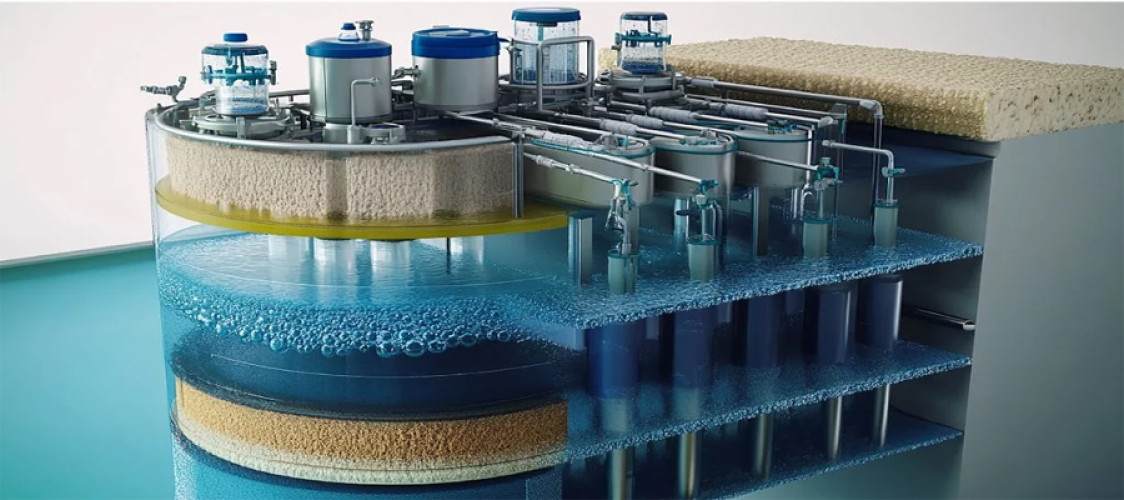
Photo: Collected
Clean and safe water is essential for life, health, and economic development. Water treatment plants play a crucial role in supplying potable water to homes, businesses, and industries while also treating wastewater to protect the environment. Whether it’s for drinking water or wastewater management, understanding the process of a water treatment plant is key to appreciating how raw or contaminated water is transformed into a usable resource. In this blog, we walk through the water treatment plant process steps, highlighting both drinking water treatment and the process of a wastewater treatment plant to show how water is purified at every stage.
What is a Water Treatment Plant?
A water treatment plant is a facility designed to improve the quality of water so that it is safe for human use and environmental discharge. There are two main types:
*Drinking Water Treatment Plants (DWTPs): Purify raw water (from rivers, lakes, or groundwater) to make it safe for consumption.
*Wastewater Treatment Plants (WWTPs): Clean used water (from homes, industries, or storm drains) before releasing it back into nature.
*While both have different purposes, they follow similar structured procedures to treat water through physical, chemical, and biological methods.
*Step-by-Step Water Treatment Plant Procedure (Drinking Water)
*Let’s explore the water treatment plant steps followed to convert raw water into clean drinking water:
1. Intake and Screening
Goal: Remove large debris like sticks, leaves, and trash.
Water is drawn from natural sources and passed through coarse screens to filter out floating debris, protecting pumps and downstream equipment.
2. Coagulation and Flocculation
Goal: Bind smaller particles into larger clusters (flocs) for easier removal.
Chemicals like alum or ferric chloride are added to destabilize fine particles. Gentle mixing allows these particles to clump together, forming visible flocs.
3. Sedimentation
Goal: Settle out the flocs formed during coagulation.
Water is moved to sedimentation basins where gravity pulls down the flocs, leaving clearer water at the top. This step significantly reduces turbidity.
4. Filtration
Goal: Remove remaining fine particles and microorganisms.
Water passes through layers of sand, gravel, and sometimes activated carbon. This step captures residual flocs, bacteria, and suspended solids.
5. Disinfection
Goal: Kill or inactivate harmful pathogens.
Chlorine, ozone, or ultraviolet (UV) light is used to disinfect the water. Chlorination is most common, ensuring that water remains safe even during distribution.
6. pH Adjustment and Storage
Goal: Stabilize water chemistry and store treated water.
Lime or soda ash may be added to adjust the pH. Treated water is stored in clear water tanks or reservoirs before being distributed.
Water Treatment Plant Process Steps for Wastewater
Now, let’s shift focus to the process of a wastewater treatment plant, which treats sewage or industrial effluent before it’s safely discharged or reused.
1. Preliminary Treatment
Goal: Remove large solids and non-biodegradable materials.
Screens and grit chambers remove plastics, rags, and sand to protect pumps and downstream processes.
2. Primary Treatment
Goal: Settle out suspended solids.
In sedimentation tanks, solids sink to form sludge, while lighter materials float and are skimmed off. Around 50–60% of suspended solids are removed here.
3. Secondary (Biological) Treatment
Goal: Break down organic matter using microorganisms.
*Activated Sludge Process: Air is pumped into aeration tanks to encourage bacteria to consume organic pollutants.
*Trickling Filters or Sequencing Batch Reactors (SBR) may also be used.
This step significantly reduces Biological Oxygen Demand (BOD) and removes pathogens.
4. Secondary Clarification
Goal: Separate treated water from microbial biomass (activated sludge).
The remaining solids settle in a clarifier, and a portion of the sludge is recycled to maintain the microbial community.
5. Tertiary Treatment (Optional)
Goal: Further polish the water for discharge or reuse.
Advanced methods such as filtration, nutrient removal (nitrogen and phosphorus), membrane filtration, and disinfection (UV or chlorine) are used here.
6. Sludge Treatment and Disposal
Goal: Treat and safely dispose of or reuse sludge.
Sludge is thickened, dewatered, and sometimes digested or incinerated. In some cases, treated sludge is used as fertilizer or soil conditioner.
Importance of Following Water Treatment Plant Steps
The water treatment plant process steps are designed to:
*Protect public health by removing harmful contaminants
*Ensure compliance with environmental regulations.
*Enable water reuse for irrigation, industrial, or municipal use.
*Preserve natural water bodies from pollution.
Source: Online/WExp




Copyright © 2026 Water Expo Bangladesh. All Right Reserved.
Website Design & Development ♡ MY SOFT IT